Rohrbeck Heger GmbH

ADDENDUM: In these times of global crisis, Pierre Wack’s articles are as relevant as ever. If you need but one reason for why you should be working with scenarios, here are two:

“Scenarios serve two main purposes. The first is protective: anticipating and understanding risk. The second is entrepreneurial: discovering strategic options of which you were previously unaware. This latter purpose is in the long run more important.”

ORIGINAL ARTICLE:

Pierre Wack was an eminent scenari-ologist at Shell, infamous for making scenarios a common tool through his two seminal articles published in Harvard Business Review in 1985 (here and here).

Today, everyone knows about scenario planning. But to this day, we would argue, many people who claim to know scenarios have not grasped Pierre’s true point about the power of scenarios. He had this to say about what he called common scenarios:

“Most scenarios merely quantify alternative outcomes of obvious uncertainties (for example, the price of oil may be $20 or $40 per barrel in 1995). Such scenarios are not helpful to decision makers.”

These types of scenarios are pervasive in all corporate planning and finance departments, and in strategy consultancies and economic think-thanks. However, scenarios like these often struggle to answer the question ‘So what?’ – little insight for strategic action or executive judgement can be inferred from them.

Scenarios should deliberately wrestle with uncertainty

Pierre understood and worked with ‘second-generation’ scenarios – or decision scenarios, as he preferred to call them – differently. Pierre’s concept of decision scenarios rests on this insight:

“No single “right” projection can be deduced from past behavior.
The better approach, I believe, is to accept uncertainty, try to understand it, and make it part of our reasoning.”

Pierre and his team at Shell developed scenarios that provided a much deeper understanding of how the oil industry worked – ranging from demand, supply, prices, technology, competition, business cycle changes. This understanding gave them the ability to foresee events that other oil companies and Shell’s own management at the time did not. For example, their scenarios in the early 70s indicated:

  • The global oil market would switch from a buyers’ to sellers’ market
  • There would be changing interfuel competition (from coal, gas, nuclear power)
  • Major oil companies could become huge, heavily committed and less flexible
  • Inevitably, the Middle East would be the balancing source of oil supply.

Scenarios must inform strategic decisions

With these insights, Pierre and his team also came to understand the complexity of what they called the ‘microcosm’ of corporate decision-making and the ‘macrocosm’ of (national) power struggles in the global oil market. Their objective therefore became to create scenarios that could advance strategic thinking within Shell:

“We now wanted to design scenarios so that managers would question their own model of reality and change it when necessary, so as to come up with strategic insights beyond their minds’ previous reach.”

Fundamentally, Pierre realized that scenarios are key to defining future strategies in times of change, by influencing decision-making behavior:

“Strategies are the product of a worldview. When the world changes, managers need to share some common view of the new world. […] Scenarios express and communicate this common view, a shared understanding of the new realities to all parts of the organization.”

At Rohrbeck Heger, we follow in Pierre’s footsteps and use scenario-based strategizing to help our customers be future prepared – contact us to learn more about how we bring strategy and scenarios together.

Zukunftschancen und -risiken erfolgreich erkennen und managen: Corporate Foresight ist eine vergleichbar junge Management-Disziplin, die Entscheidungsträgern zahlreiche Methoden für ihre strategische Arbeit zur Verfügung stellt. Die EBS Universität in Berlin bietet ein berufsbegleitendes Zertifikatsprogramm an und vermittelt genau diese Inhalte in zwei Praxismodulen (insgesamt 5 Tage) und einer Abschlussprüfung.

Zielgruppe: Das Programm wurde konzipiert für Stabsfunktionen, Projektleiter und Führungskräfte, insbesondere aus den Bereichen

  • Unternehmensentwicklung, Business Development
  • Strategische Planung, Unternehmenssteuerung, Controlling
  • Innovations- und Risikomanagement
  • F&E und Marketing
  • Unternehmensberatungen
  • Öffentlicher Sektor, Hochschulentwicklung, Verbände

Die Zielgruppe des Programms sind das Mittelmanagement von großen und mittelständischen Organisationen, die interne Foresight-Prozesse professionalisieren möchten. Sowie Organisationen, die in unsicheren, dynamischen und komplexen Umfeldern agieren und/oder mittel- bis langfristige Planungshorizonte berücksichtigen müssen.

Lernen Sie Instrumente und Ansätze zum effizienten Management von Komplexität, Dynamik und Unsicherheit im Organisationskontext kennen und verstehen Sie, wie Zukunftschancen und -risiken für Ihr Unternehmen identifiziert werden.

Melden Sie sich jetzt hier zum Zertifikatsprogramm Corporate Foresight der EBS Universität an.

Sie erhalten einen Überblick über das Gestalten und Führen erfolgreicher Corporate-Foresight-Projekte und Systeme sowie ihre Implementierung im Organisationskontext.

Die Inhalte der beiden Module des Zertifikatsprogrammes Corporate Foresight vermitteln den Einsatz zentraler Methoden und verbinden diese mit erfolgreichen Praxisbeispielen, sodass Sie als Teilnehmer lernen, eigene Corporate Foresight Projekte und Systeme zu entwickeln und wie diese erfolgreich in Ihrem Unternehmen eingeführt werden können.

Praxisbeispiele, das Arbeiten an Fallbeispielen und der Erfahrungsaustausch untereinander sowie mit den Experten aus Wissenschaft und Praxis tragen zu einem interaktiven Programm auf Universitätsniveau bei.

Eine detailierte Übersicht der Inhalte beider Praxismodule finden Sie im Programmheft der EBS: hier.

Wissenschaftliche Leitung und Programmleitung: 

Prof. Dr. Ronald Gleich, Tobias Heger, Klaus Burmeister

Werden Sie Corporate Foresight Professional!

In April 2019 the CEO Summit was held in Washington DC, where “Leadership for the 21st Century & Beyond” brought together some of the world´s top visionaries and leaders to accelerate a new kind of leadership at the forefront for a new business logic – integrating purpose and profit.

With shared visions of the future, leaders can help organizations to bring their visions cognitively closer to understand the future. Scenario strategizing can help organizations to know precisely where they want to go and how to achieve the right goals to get there.

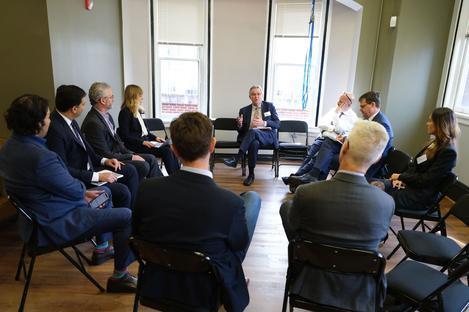
Our Manager Dr. Sebastian Knab was invited to share his insights on scenario thinking. He talked about the new opportunities of leadership, partnerships and the shift from business as usual. In his talk, Sebastian focused on scenarios as something you need when encountering uncertainties, the need for thinking long-term and contributing to systemic change.

“One thing about foresight is long-term thinking, where companies must shift their focus from near-term pressure to achieving goals longer than two years ahead. This can seem uncomfortable to some, but as we are faced with socio-technical transitions, foresight comes into play.”

Dr. Sebastian Knab

Integrating sustainable development and profit is not the most intuitive thing leaders address. It’s clear that leaders tend to understand long-term thinking but are often forced to address the short-term pressure due to shareholders, environment or competition. Leaders often understand that they need to collaborate through partnerships to make it happen, but it can be difficult to overcome the structures and setups. For the beginning, the challenge is to create a bridge across this gap. Then foresight can contribute.

Foresight methods allow companies to gain and understand the systemic change that happens in different environments by integrating different perspectives.
Methods like scenarios analysis are specifically designed to understand systemic change. For instance, it can be used to analyze changes in one area to discover possible impacts on other areas.

How scenario-based strategizing can boost your business
The special feature about this foresight method is to combine the company’s external and internal views. The scenario-part observes external action and how the world around your company acts, while the strategizing addresses internal issues. By reconciling long- and short-term views, we can foresee scenarios for 2030/2035. The purpose of it is to be prepared for the future, by creating strategies for the presence.

“At the CEO Summit, the leaders were introduced to the new business logic, which states: If you want to develop business, it is not about incremental changes, but about systemic change.”

Dr. Sebastian Knab

Sebastian shares his 3 key take-aways from the CEO Summit with us:

  • Align your organization to where the world is going.
  • When this is hard to do alone, partnerships are key!
  • Every organization needs a long-term strategy and this needs to be aligned with other actor´s actions, where scenario strategizing come into play.

Sebastian shares his 3 key learnings about what makes a purpose driven leader:

  • Do more sense-making and are more context aware.
  • Utilizing collective intelligence and decision making!
  • Cooperate to share scarce resources focusing on ideation and using filters to figure out which idea to pursue.

This article is inspired by Dr. Sebastian Knab’s talk at the CEO summit 2019 in Washington.

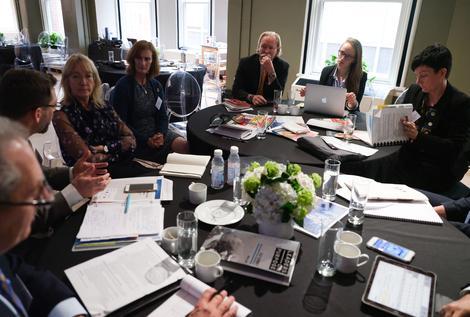
On April 10th till 12th, a group of Competitive Intelligence professionals gathered at The IntelliSummit 2019 in Stockholm to exchange best practices. Our founding partner René Rohrbeck was invited to talk and host a roundtable discussion about “How will AI change the intelligence work”. In case you could not join the 80+ guests at the conference, we summarized a short review and prepared a video.

The fundamental questions for any organizations
The Greek philosopher Heraclitus of Ephesus rightly said that ‘the only thing that is constant is change’. Future markets will have changes which corporates are busy preparing for. The fundamental questions for any organization to answer range from “Which new competitors might be entering my industry in the future?” “How will the boundaries of my industry change?” “What actions might my current and future competitors utilize to gain a competitive advantage?” “What kind of innovations are my competitors working on to gain a competitive advantage?” to “How to capture and sustain a superior position in future markets?”.

Watch the video of his talk here here

The IntelliSummit 2019 in Stockholm was attended by more than 10 expert speakers and close to 80 guests, with a focused theme Creating Competitive Advantages in a Complex Future. Six special roundtables covered topics such as: How do you increase the value of IT tools for CI in the future? Where to find content? Getting the right data into your system so that you can get the right results. Managing expectations in a changing CI world. ‘Lead me, follow me’ – The pros and cons of recommending actions. Unconventional Market Intelligence Methods – Best Practices and Possibilities. How do you increase the value of IT tools for CI in the future? And how will AI change the intelligence work? moderated by Rene Rohrbeck.

The 3 most impressing key take-aways from René’s talk:

The emphasis in the intelligence work is shifting from backward to forward-looking.
In our vision, Corporate foresight permits an organization to lay the foundation for future competitive advantage.
Corporate foresight is identifying, observing and interpreting factors that induce change, determining possible organization-specific implications, and triggering appropriate organizational responses. Corporate Foresight involves multiple stakeholders and creates value through providing access to critical resources ahead of the competition, preparing the organization for change, and permitting the organization to steer proactively towards a desired future.

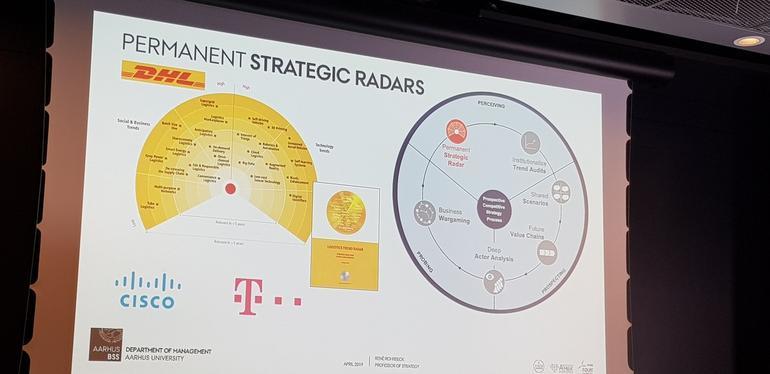
Impactful intelligence creates shared future outlooks in the forms of scenarios, radars or trend audits. 
Scenario planning is important for competitive analysis. Scenarios are defined as challenging descriptions of alternative future states. Competitor scenarios have been used to identify and test plausible competitor strategy alternatives. They map out industry opportunities and link them to anticipated competitor actions. They serve as mental models that form the basis for strategizing, and they allow an organization to assess its responses to competitors’ moves and select a strategy that is viable under a variety of competitive conditions. In doing so, scenario planning serves as an organizational radar, allowing decision-makers to develop an early warning system for the potentially devastating market.

We move towards real-time participation in decision-making processes. 
Organizations need wargames, monitoring and dashboards for real-time decision making. They will have to combine scenario planning and business wargaming to better anticipate future competitive dynamics. Scenario analysis that leverages deep foresight based on key external factors is often too weak in proposing clear organizational actions in regard to competitive dynamics. You have to up the game. Typically, business wargames are directly linked to strategic decisions concerning the competitive positioning of an organization.

The content of this article is inspired by Professor René Rohrbeck’s talk at The IntelliSummit 2019 and his recently published paper in 2019: Combining scenario planning and business wargaming to better anticipate future competitive dynamics

Can AI help predict the future?

Part V: What’s next when it comes to leveraging foresight?

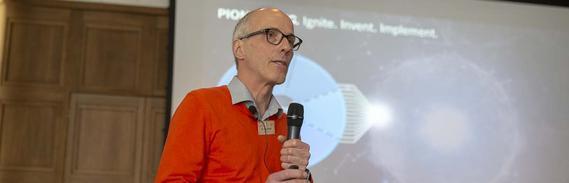
Dr. Frank Ruff, Senior Manager of PIONEERING NeXt, Daimler AG raised the quintessential question of “What’s next when it comes to leveraging foresight, collaborative innovation and customer insights in an integrated corporate ecosystem.”

His talk focused on the organisational adoption of AI and how the future needs to look at history to make any predictions when it comes to technology. He spoke about what led to the evolution of corporate innovation ecosystems. “In the 1950s, the technology push happened through isolated research of R&D where researchers focused on first Innovating and then later commercialising.

In the early 2000s till 2010, it was overtaken by the umbrella of open innovation which includes design thinking, startup mentality, MVP, increased focus on networks. And the future lies in crowdsourcing and AI through integrated innovation system, big data, and deep learning,” he summarized.

Find impressions from the first AI-Enabled Tech Foresight Summit powered by Rohrbeck Heger and Itonics here.

If you are interested in getting further information on upcoming Summits on strategic foresight and innovation, please register for our newsletter or contact us.

Can AI help to predict the future?

Part IV: How do you understand Machine Learning and its relationship with Precision Medicine?

Prof. Dr. Magnus Boman from Royal Institute of Technology, Stockholm gave an unbiased speech on Precision Medicine – An application case for AI-based foresight. Prof Boman started his talk by emphasising that he will focus on AI for foresight and NOT Foresight on AI as he dwells more into the curious case of Precision Medicine.

He quoted the US National Research Council Report on Precision Medicine (2013), “Precision Medicine refers to the tailoring of medical treatment to the individual characteristics of each patient, but rather the ability to classify individuals into subpopulations that differ in their susceptibility to a particular disease, in the biology and/or prognosis of those diseases they may develop, or in their response to a specific treatment. Preventive or therapeutic interventions can then be concentrated on those who will benefit, sparing expense and side effects for those who will not. “

The most interesting aspect of his talk was the correlation between “machine learning” and “learning machines”. Prof Boman says, “I teach how to program learning machines and not machine learning. How do you learn to learn? If we have to foresight, we must step on whatever we know until now. ‘Transfer learning’ is my holy grail.”

Read more about AI Tech Foresight in Part V: What’s next when it comes to leveraging foresight?

Can AI help to predict the future?

Part III: What do corporates feel about innovation in AI?

John Miranda, Market Insights Manager at Intel Corporation focused on the aspect of ethics and trust in AI as companies are adapting to change, “As AI begins to impact our lives with use cases such as making credit decisions to recommending clinical treatment attention has been shifting towards the ethics of AI systems. Our chief concern is that widely noted deep learning algorithms, by their very design lack transparency, and will absorb unintended biases found in training data. Regulatory bodies are emerging globally to address the ethical use of AI as acceptable practices and legal frameworks emerge, however it is early days for solutions. In response, companies are forming internal and industry bodies that help shape corporate policy in this area.”

“As AI begins to impact our lives with use cases such as making credit decisions to recommending clinical treatment attention has been shifting towards the ethics of AI systems.”

John Miranda

The most prominent question raised in his talk was how AI will eventually be driving action with leadership decisions and what will be the degree of involvement? He probes, “When is actually the time that AI will be influencing executives to drive investment decisions? When will they be able to decide where they are putting their next half-billion dollar investment through AI? AI is still a long way from understanding the cause and effect relationship.”

Read more about AI Tech Foresight in Part IV: How do you understand Machine Learning and its relationship with Precision Medicine?

Can AI help to predict the future?

Part II: The perspective of startups: How are they using AI Algorithms to solve problems?

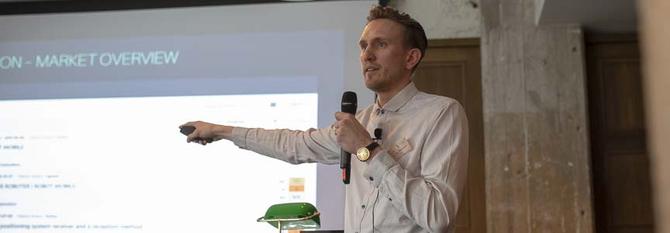
Dr. Tim Pohlmann, CEO and Founder, IPlytics GmbH, a young startup founded in Berlin in 2012 gave a talk about AI Algorithms to Predict the Value of Patents and focused on the problem of information overflow with an example:

We have around 500,000 patents being filed worldwide per month, 50,000 patent trades per month, 450,000 worldwide literature on patents, 10,000 worldwide ISO standards per month. He focused on how the solution lies in automatically deriving actionable insights from disparate information.

“Collection of patent data is important but it needs to be connected into the ecosystem and that is why the IPlytics platform combines the data sources to feed an agnostic innovation graph which comprises 90 million patent documents, 3 million company profiles, 1 million startup profiles, 2 million standards documents, 60 million scientific articles, 1.5 million standard contributions.”

“Collection of patent data is important but it needs to be connected into the ecosystem (…).”

Dr. Tim Pohlmann

He ended his talk by saying that humans have valuable domain knowledge but not the ability to search a million of documents in a few hours. AI algorithms make use of human input to predict an outcome as close to a human’s intelligent decision as possible.


IPlytics is an innovative market intelligence company headed up by a team of economists, computer scientists and engineers and an online-based market intelligence tool (IPlytics Platform) to analyze technology trends, market developments and a company’s competitive position.


Read more about AI Tech Foresight in Part III: What do corporates feel about innovation in AI?

Can AI help to predict the Future?

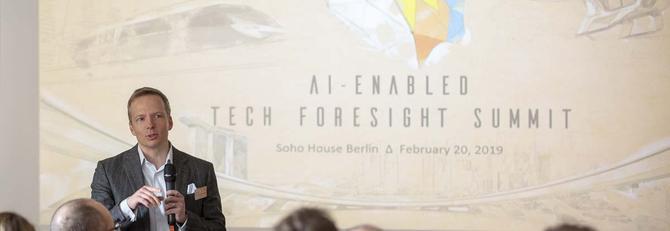
Part I: Highlights from the “AI-Enabled Tech Foresight Summit” in Berlin, Feb 2019

The evolution of corporate innovation ecosystem; ethics of AI; the curious case of precision medicine; and the dynamics of corporate-startup collaboration – the AI-Enabled Foresight Summit held in Berlin on February 20, 2019 had all the ingredients that made us ponder on how AI will enable corporate foresight in companies. What is actually possible with AI-enabled technology foresight? What can be expected and where do we stand today? And finally: what are your experiences from experimenting with software-based solutions so far?

“It is not the strongest of the species that survives, nor the most intelligent that survives. It is the one that is the most adaptable to change.”

Charles Darwin

There is a reason why Charles Darwin said “It is not the strongest of the species that survives, nor the most intelligent that survives. It is the one that is the most adaptable to change.” This famous quote by the man who published the theory of evolution in 1859 explains the state of AI in technology foresight at present to a great extent. The ones who use data with “intelligence” and “adapt” to the behaviour of changing algorithms will survive as they innovate.

René Rohrbeck, Professor of Strategy at the Aarhus School of Business and Social Sciences, Aarhus University and Founding Partner at Rohrbeck Heger as well as one of the Summit experts puts the present scenario into context to Darwin’s theory in a practical world as he explains, “I think we are right now in a very exciting field because almost every week there is a new startup company offering a new algorithm. The big companies are observing a lot but there is not that much implementation. There is still a long gap between full productive use of these capabilities. Many firms have automated a lot of scanning work and monitoring work of competitors looking at their R&D and patent landscape.” More specifically, he mentions that the first step is getting better in managing the interface between operating new capabilities and the human operator. We can now ask smarter questions so we need to rethink our decision making which can move more towards real time. Thirdly and obviously, we have capabilities which allow us to move more into pattern recognition.

“The big companies are observing a lot but there is not that much implementation. There is still a long gap between full productive use of these capabilities.”

Prof. René Rohrbeck

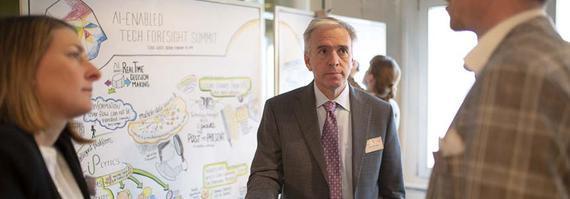
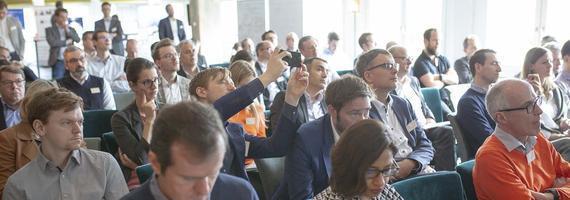
The Summit hosted 50 industry experts including startups, innovation practitioners as well as Heads of Innovation and Foresight Units of some well-known brands like Adidas, BASF, Daimler, Intel and SAP. They all discussed best practices in applying tech foresight through AI.

AI has a lot of potential in understanding, in processing and in the near future also in interpreting all available data to provide valuable insights to help decision makers to understand the technology environment that is constantly changing and evolving. But the critical question is how far are we from this ideal situation? Is AI applicable already? How can we adapt to the shifting realities brought on by emerging technologies and discover how others are responding to the disruptive technological change? In this context, the rise of artificial intelligence (AI) is of particular importance and creates new opportunities at the interface between methodology and practice.

Read more about AI Tech Foresight in Part II: The perspective of startups: How are they using AI Algorithms to solve problems?

What are business trends for 2019?

Read the whole Rohrbeck Heger Newsletter here.

In each company you can find many different points of view about the future and various opinions about the firm’s long-term success. The challenge lies in the alignment of opinions and using them to utilize the firm’s full potential. The radar is a tool to identify opportunities and change in market areas, technologies and new product development, to evaluate its potential for the organization and to align activities with strategic priorities. 

The Technology Radar 
This much-quoted paper from Prof. René Rohrbeck analyzes the establishment of a technology intelligence tool of the Deutsche Telekom Laboratories – the Technology Radar. Goals and method are contrasted to approaches discussed in literature. After the presentation of exemplary findings of the Technology Radar, its role within the innovation and technology management is discussed. 

The paper closes with lessons learned, key success factors and recommendations for the introduction of technology intelligence systems. Read the paper on Research Gate.

The Innovation Radar in a Network Environment 
For our ambitious Swedish client Viable Cities – smart sustainable and attractive –  we customized the radar concept to its network setting to become an outstanding tool for network foresight, portfolio management and co-creation. Watch the this linked video for a presentation of the concept by Prof. Magnus Boman (KTH Stockholm) and Dr. Sebastian Knab (Rohrbeck Heger GmbH) in Stockholm.

This content was published in our newsletter.