Rohrbeck Heger GmbH

Some of the articles we’ve found interesting recently. You’ll find food for thought in the areas of foresight, business & tech, health & people, energy & environment, logistics & mobility, AI & computing.

FORESIGHT
A Better Crystal Ball
Philip E. Tetlock of ‘Super Forecasters’ fame explains how to better think about the future.
Developing New Future Scenarios for the U.S. Coast Guards Evergreen Strategic Foresight Program
RAND shares insights into the U.S. Coast Guard’s ‘Evergreen’ Strategic Foresight programme, and the latest global planning scenarios used to evaluate and define future service readiness. “Without weighing the long view of changes in the operating environment …, the Coast Guard will not be able to have full awareness of what blind spots might exist in current strategies and plans. Being ready for the spectrum of challenges the future might bring requires mindfulness of both the near and long terms and how change will affect the Coast Guard.”
Scenarios for Geopolitical Order in 2025-2030: What will Great Power Competition Look Like
The CSIS Risk and Foresight Group share 4 scenarios on the future geopolitical landscape towards 2030. The scenarios were all designed to test policymakers’ preconceived notions about the defense and security challenges facing the United States and its allies in the second half of this decade. The four scenarios especially address the increasingly competitive bilateral dynamics between the US and China – indeed, none of the scenarios envisioned the U.S.-China relationships to be fully cooperative and positive.

BUSINESS & TECH
Why Amazon Might Outlive the Rest of Big Tech
New York University Stern School of Business professor Scott Galloway believes Amazon.com Inc. will outlive the other biggest companies in tech. Galloway argues ‘Amazon was created for this pandemic’, and predicts that Amazon’s next big move is into healthcare by having what he calls ‘a three-dimensional avatar of your health: “They know what food you order, they know what products you buy, they know what your body mass index is, they know your income, they know whether you are in a monogamous relationship, they know your zip code, your education, all the signals that go in an actuarial table…”.
Can AI Make Your Job More Interesting?
Two DARPA researchers argue that artificial intelligence will never overtake human capacity in its entirety. Instead, AI will coordinate diverse forms of intelligence and human capabilities to achieve superior outcomes. They envision a future where an AI-augmented platform supports an “open” organization capable of both adaptation and scale (Agile Teams), dynamically coordinating and distributing tasks between humans and AI systems.
The Future of Jobs According to the WEF
Forbes summarises key take-aways from the World Economic Forum’s ‘Future of Work’ reports. Though based on survey data, the report finds that: companies are increasingly automating jobs, and ‘contracting out’ task-specialized work (gig economy?); income inequality will widen (low-paying, manual labour); remote work will grow (where possible); reskilling remains important.

HEALTH & PEOPLE
Want to See the Future of Digital Health Tools? Look to Germany
This article dives into how Germany’s Digital Healthcare Act (Digitales-Versorgungs-Gesetz, or DVG) seeks to accelerate the digitalization of healthcare in Germany. One of the law’s more novel ideas is the creation of a formal registry of “prescribable applications” (Digitale Gesundheitsanwendungen, or DiGA), which physicians can ‘prescribe’ to patients (and which are subsidized). Forgive us for saying so, but for once Germany seems to be taking the lead in digital – though our Nordic colleagues disagree.
The Digital Ruins of a Forgotten Future
The Atlantic revisits ‘The Second Life’, the virtual world that launched in 2003 and was hailed as the future of the Internet. Until Facebook (and everything since). Second Life consists entirely of user-generated content, built by virtual avatars controlled by human users. Usage peaked in 2007 with 1 million users, but usage remains constant today at 800,000. More impressively, in the first decade after its launch, users spent $3.2 billion of real money on in-world transactions. Users argue that Second Life truly has become their virtual home, with ‘objects they could never keep in their real home’ and an avatar of the ‘perfect me’.
The Future of Staying Home
This article chronicles how the home – and our expectation of the home – has evolved over time. Increasingly, our houses are not only a place to recharge – but also a place to protect ourselves from an increasingly hostile outdoors (germs, fire, flooding, and heat).

ENERGY & ENVIRONMENT
Why did Renewables Become So Cheap So Fast?
Renewable energy is safer and cleaner than fossil fuels – and now, in most places, also cheaper. This article dives deep into the numbers behind this remarkable transformation. Noting, for example, that the relative price of electricity from solar photovoltaics, for example, declined by 89% from 2009 to 2019 – making it more expensive to provide electricity via coal. In fact, in 2019, renewables accounted for 72% of all new capacity additions worldwide. Due to the ‘learning curve’ nature of renewable energy technology, we should expect the price difference between expensive fossil fuels and cheap renewables to become even larger in the future.
Say Hello to Artificial Intelligence to Manage Our Power Grid
This article discusses the two major problems the grid operators must overcome. It explains the need for the proliferation of the autonomous energy grids using AI, renewable energy, and energy storage to optimize the grid.
Adidas and H&M Kickstart an EU-funded Circular Fashion Project
In the fight to mitigate climate change, this article highlights how Adidas and H&M kickstarted the EU-funded New Cotton Project 2020 with the aim to collect, sort, and regenerate old clothing into new items for sale on the high street.
Pessimistic Outlook for Oil Prices
A Texas oil giant lowered its outlook on oil prices, suggesting it expects the fallout from the coronavirus pandemic to linger for much of the next decade.

LOGISTICS & MOBILITY
Air Transport will Never Be the Same Again…
René Rohrbeck discusses the four drivers of change that herald a radical transition in air transportation:
business travel, regionalization of routes, “star” networks, and flight shaming.
Taiwan and New Zealand Show Business Travel’s Future
The Financial Times looks at what the future of business travel may look like – by understanding what has changed, and what hasn’t, in two countries largely unaffected by Covid: Taiwan and New Zealand. Some predictions: travel will be subdued for some years due to health and environmental concerns; ‘three days at home, two days in office’ will become the norm; people will attend conferences remotely; intra-company visits in Europe and US will decline.
Amazon Outpaced
Amazon’s third-quarter earnings soar as pandemic sales triple profits. Yet, the juggernaut of e-commerce is far from being invincible — it is being outpaced by dozens of competitors in Europe. This piece carefully covers the challenges Amazon is facing in Europe.

AI & COMPUTING
Deep Learning Has Reinvented Quality Control in Manufacturing
IEEE explains how lifelong learning systems can optimize deep neural networks and optimize manufacturing.
Artificial Intelligence Is Now Smart Enough to Know When It Can’t Be Trusted
AI is already making decisions in fields that affect human lives like autonomous driving and medical diagnosis. But now, researchers have made AI self-aware of its own trustworthiness – through  Deep Evidential Regression. Fundamentally, the AI bases its scoring on the quality of the available data it has to work with.
Achieving Quantum Supremacy
TechRepublic has six experts share their predictions on the future of quantum supremacy. More companies will look for specific use cases that can be leveraged sometime in the next decade, as computers improve and the number of available qubits continues to grow.
The Transformational Power of Recommendation
In this data-driven market, one can consider data to be your DNA, provided you spent 100% of your life experience on or through it. This article talks about the recommendation engines that promise to revolutionize how customers buy and employees work.
  • Four drivers of change herald a radical transition in air transportation:
    business travel, regionalization of routes, “star” networks, and flight shaming
  • The post-Covid scenarios will emerge around these four factors
  • Studying these different possible scenarios will be the subject of the continuation of Professor Rohrbeck’s research project

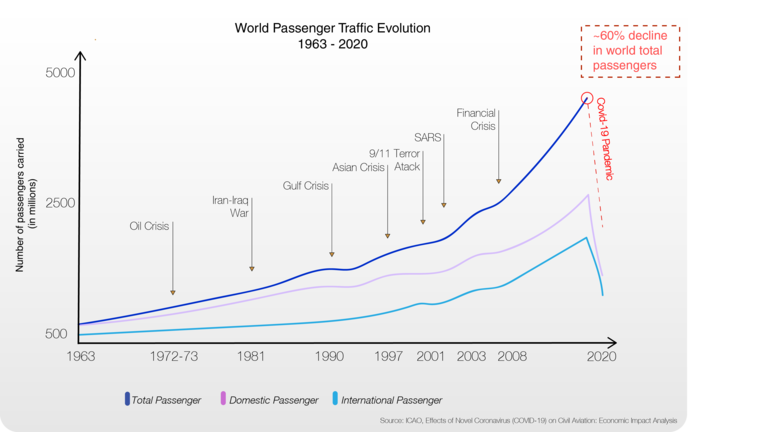
“In less than 65 days, we have returned to the flight plan levels of 65 years ago. This is extremely bitter, devastating, and painful”. This was the observation made by Lufthansa CEO Carsten Spohr when he addressed the German company’s shareholders on 5th May 2020.
In spring 2020, Lufthansa’s number of passengers only amounted to 1% compared to 2019. This figure illustrates the scale of the crisis, as well as the gloomy global outlook for the aviation sector. The International Air Transport Association (IATA) predicts a 55% decrease in passengers worldwide compared to 2019, including months when traffic was still at a normal level.

Despite this unprecedented crisis in its intensity, a future without air transport remains unthinkable. For most of Professor Rohrbeck’s students, air travel is the only way to join the EDHEC campus and go back to their families; for many, it is a way to discover new cultures and make new friends and drive global understanding. It also has a strong role in supporting the global economy and fuel the growth of prosperity. Compared to any other global crisis, the one we are living in today has a stark contrast in its intensity in the history of air travel evolution. So, can the airline industry be saved? And if yes, how? And, what will it look like after the crisis?

Business travel, back to normal?

Perceived as an essential driver of economic growth, business travel has enjoyed the magical aura to transform physical meetings around the world into a business and economic opportunity for many years. It has also been an important growth engine for the airline industry. However, business travel may never return to its pre-crisis level.
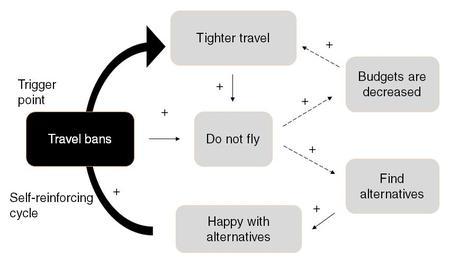
As the feedback chart below suggests, travel bans involve fewer (or no) flights, resulting in lower budgets and tougher travel regulations that may prevail even after travel bans have been lifted. If such a cycle is stopped within 4 weeks, new behaviors will not have time to adapt, and the system will generally return to its original state.

However, the longer the crisis, the more likely it is that systemic changes will become permanent. The lack of business trips and face-to-face meetings has led to the adoption of mass alternatives, such as video conferencing, virtual collaboration, online whiteboards, etc. If these alternatives can show that they can increase productivity, business travel would become an exception for meetings, as was the case 65 years ago.

From globalization to regionalization?

Since 2005, globalization has shown signs of slowing down. Business internationalization strategies are increasingly focused on local responsiveness and less and less on control and dependence on international headquarters. Global trade tensions, such as the U.S.-China conflict, may decrease intercontinental travel. The Covid-19 crisis could accelerate this trend and promote regional trade and supply.

A recent study showed that an important response to the Covid-19 crisis was the relocation of supply chains and, in particular, the emphasis on the use of regional ecosystems. This response could become permanent, reinforced by the low level of international travel. Recent figures from the International Civil Aviation Organization (ICAO) show that while inter-regional travel has picked up from an average of 250 million passengers before the crisis to 100 million today, the number of international passengers is 20 million, well below the pre-crisis 160 million.

The end of the hub & spoke model?

It is interesting to note that the impact of the Covid-19 pandemic has been felt differently by low-cost airlines such as Ryan Air or EasyJet, and traditional network airlines (CATR), such as Air France, Lufthansa or Singapore Airlines. CATRs rely on central platforms where short-haul flights are connected to long-haul flights that are more economically attractive with their larger aircraft capacity. This hub-and-spoke model also creates powerful network effects, allowing major airlines to achieve economies of scale and create powerful entry barriers for newcomers.

These benefits for CATRs, however, come at the cost of passenger acceptance. Indeed, these routes involve connections. Normally, this can be called into question for environmental reasons and may be perceived as an inconvenience by passengers. But in times of health crisis, hubs are key risk areas in passenger travel, as it remains difficult to guarantee standards of social distance at airports. The interdependence between short-haul and long-haul flights is also a huge obstacle to recovery. For CATRs, the absence of long-haul flights means that short-haul flights must be reduced. The absence of short-haul flights will make it impossible to fill large long-haul flights. Low-cost, full-service airlines operating a point-to-point model can be much more responsive in opening and closing routes to meet fluctuating demand. Most CATRs have a strategy to hold on and eventually restart their hub-and-spoke model. But to avoid a breakdown of their long-haul refueling system, they must keep open roads that are not profitable. This makes them, in most cases, dependent on state aid. The question is how long this strategy can be maintained and how long taxpayers will be willing to cover the losses.
It’s no wonder that some CATRs are rediscovering holiday travel with their point-to-point offerings. “Never before have we included so many new holiday destinations in our program. This is our response to the wishes of our customers,” explains Harry Hohmeister, a member of the board of directors of Deutsche Lufthansa AG.

And what about flight-shaming?

The growing awareness of the environmental impact has led to a flygskam (flight shaming) movement in Sweden to avoid air travel that has now gone far beyond the kingdom’s borders.
However, there are also signs that containment-related measures, in response to Covid-19, have increased citizens’ desire to adopt a calmer lifestyle. This raises questions about the cosmopolitan way of life that the middle classes have so easily adopted. This point remains at the heart of aviation players’ concerns, even if its real influence on consumer behavior remains difficult to measure.

The article was originally published in French by The Conversation

In September 2020, EDHEC Business School launched a project on the future of the air transport industry. As part of this project, 13 partners from the airline ecosystem are supported in using different forecasting methods to study scenarios for this industry’s future.

Join our two upcoming sessions on
The Future of Air Travel – Challenges and Solutions (December 11th, 10.00-11.00 CET)

The Future of Air Travel – Scenarios and their Desirability (December 11th, 13.00-14.00 CET)

If there is one thing we might take away from 2020, it is that it certainly helps to prepare for the unexpected.
As we have all learnt this year, living through a pandemic exposes weaknesses in companies that cannot swiftly adapt to changing circumstances, especially those that were already hesitant about moving with these increasingly digitalising and data-driven times.

Conversely, it is the case that companies that do have a future-facing mindset have found ways to cope with, and in some cases, even thrive amid this unique brand of uncertainty and crisis. They have done so using creativity, agility and a host of first-rate decision-making skills undergirded by sound and rigorous understanding of the potential data offers us in this area.
At Rohrbeck Heger, we ourselves have been put to the test and forced to modify many approaches that worked well for us before the crisis struck. A core pillar of our work involves bringing people together and fermenting discourse in a variety of offline scenarios, which, naturally, had to go online.

A cherished event on our calendar, our AI-enabled Tech Foresight Summit, in which, in partnership with ITONICS and the EDHEC business school, we bring together a host of world-renown speakers operating at the cutting edge of business, politics and advocacy, also underwent a drastic change in format: We offered our audiences a hybrid platform boasting panels that combined in studio chats and live missives from a host of home offices beyond Berlin.

We were excited to engage with audiences by experimenting with ways to make the most out of the diverse forms of interaction that took place that day, accumulating insight into how our audiences related to the ideas and themes explored in panels via polls and questionnaires. One poll in particular struck me as insightful: It revealed that very few companies seem ready to work with data, and that that was because few – only 52 per cent of those polled – had data at all.

Who’s afraid of big data?

That discovery came as a surprise, and proved just how important it is for our community to engage with and learn from pioneering AI experts such as those gracing our panels. Through the day, we learnt about how forward-thinking companies are starting to harness the potential of data and artificial intelligence in determining their course of action, what such work truly entails, and how far we’ve come and have left to go.

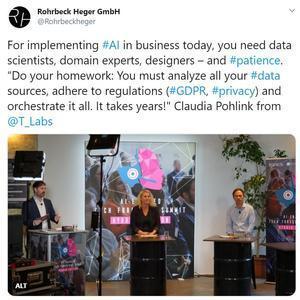
That was a subject that lay at the heart of our first panel, in which Claudia Pohlink, who heads up Artificial Intelligence at Deutsche Telekom’s research unit, described the painstaking and nitty-gritty effort that goes into using big data and AI – a point echoed by Innovation Head of Siemens’ Bernd Blumoser, as Didier Boulet, the Group Chief Designer at Thales, emphasized how integral a human-centered design that inspires – and warrants – trust, is to artificial intelligence.

“We need to have realistic expectations around AI, as it’s not a magic tool. It’s hard work,” said Blumoser, a comment elaborated on by Pohlink, who went into describing the cross-disciplinary complexity that comes with dealing with big data and using it to make smart decisions.
“You have to organize all these data sources, and you have to orchestrate. And you don’t just need data scientists, you also need domain experts,” she said. “You cannot just take a data set and put that into the machine learning software and expect some results. You need specific questions where you think artificial intelligence or data and analytics can answer these questions. And finally, you need patience.”
In this ‘Cyborg Strategy-Designer’ panel, which explored thoughts on what the relationship between man and artificial intelligence will look like in the years to come – and the extent to which we will be able to pass on important decision-making responsibilities to our machines, we addressed the question of whether passing on such power might end up endangering or even annihilating us.

“AI poses the most serious threat to the survival of the human race,” Elon Musk has said; an inflammatory statement that our panelists weren’t all that enthusiastic about. Blumoser’s retort was quick and pithy:
“I think the biggest threat for the survival of humanity is the human,” he said, addressing alongside Pohlink and Didier how dystopian Sci-fi has coloured our perception of where artificial intelligence is headed. Another interesting point sprung from Pohlink raising the question of whether gender plays a part in how we perceive threat, competition and the inevitability of aggression, noting that, from her experience at least, doomsday AI commentators tend all to be men.

She went on to remind audiences that our fears of AI stem from particular biases, and that, in any case, the AI the world operates with at present is simply “pure statistics,” in which predictions for the future are made based on historical data. Provided we do enough “homework” and take care not to let these biases get in the way, such insights can help us make wiser decisions, she said.
My main takeaway from this enlightening panel is that while there is certainly a great deal of promise in this area of using AI for strategic decision-making, we still have a long way to go – and that we’re unlikely to see a Terminator show up and wreak havoc on the world any time soon.

The future of decision-making 

Our second panel flowed seamlessly from the first, featuring a group of online and offline speakers delving deeper into the subject of decision-making, particularly in the short term. This at times scintillatingly recondite session my co-founder René Rohrbeck kicked off by explaining, from his home office in Lille, the evolutionary-basis behind the mistrust humans have in algorithms, and how this is something we might have to unlearn if we are to make the most out of big data’s potential to guide us.
He was joined in the panel ‘Better decisions with AI’ by virtual participants Michael Berns, a veteran consultant who currently serves as director at PwC’s AI and FinTech practice, and Michael Grottke, the principal scientist at GfK SE and professor at Friedrich-Alexander-Universität Erlangen-Nürnberg who likes to debunk AI’s hype and push for better understanding of the reasoning systems this term represents.

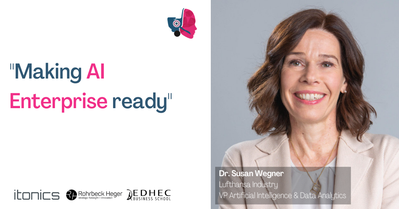
Lufthansa’s Artificial Intelligence and Data Analytics VP Dr. Susan Wegner joined us in flesh, and hammered home Pohlink’s earlier point, that using AI to support decision-making is no child’s play and that collaboration across departments is key to getting this done.

To help us really understand the realities of working in this way, she described how Lufthansa cargo were able to make various predictions, including forecasts of which routes would be most profitable based on customer demand using a variety of strands of data and techniques. Like Pohlink, she emphasized the importance of collaboration between data scientists and domain experts.
Among the challenges we heard about, Wegner described how resistance from different departments unwilling to accept new technologies posed a continued struggle, especially when it came to having them work from the cloud.
These were just some of the fascinating insights gleaned from a session that revealed how we’ve come a lot closer to using AI to at least support decision-making.

Visions and values for the road ahead

A much broader conversation followed right after lunch, during which we dove into a host of meaty topics around AI’s relationships with societies of the future, kicking off discussion with an enlightening spitballing session of how each participant envisioned an AI-enhanced world 20 or 30 years on from now.
These futuristic visions, which encompassed personal dystopias and utopias, drew from the expertise of three influential speakers who helped us contemplate and consider what values it is we most want to hold on to through these disruptions.
AI healthcare activist Bart de Witte, who has founded Hippo AI Foundation – the world’s first global NGO for open source based AI in medicine, shared his two cents of what 2030 might look like, alongside Managing Director of the German AI association, Vanessa Cann, who brought her perspective as a political scientist, and Dr. Tanja Jovanovic, a business innovation expert.
“AI is a tool, it’s an instrument. And it really depends on how we use it, so it can be in the interests of society,” said Cann. “But, on the other hand, it can also be in the interests of single people, of single companies,” she said, warning that issues around the sharing of data will persist in Europe if we find ourselves dependent on Chinese and American companies.
“I think we have to be careful about really developing our own AI that also enforces our European values,” she added. This expansive conversation covered all things political, economical, social and technological related to AI, trust, open data and the question of how data will be handled.

Countless takeaways to be had here, and it was a delight to hear about the ways in which we might – as individuals and as a society – have agency in shaping our cultures and societies as they develop with increasing enmeshment with machines. And that trust is paramount.

Forecasts on foresight

Rounding off a long and stimulating day was a discussion on a topic very close to my heart of course, and that is innovations in foresighting.
We welcomed a lively panel of experts in this area, including Sven Taubert who heads up Corporate Foresight & Market Intelligence at Lufthansa Technik and who brought a refreshing whimsy to the conversation, alongside Prof. Dr. Sven Schimpf, Managing Director at Fraunhofer Group for Innovation Research and Dr. Michael Durst, Founder & CEO of ITONICS GmbH.
Here audiences could build on much of what was learnt through the day about where AI might take us and empower us in terms of being clever, agile and efficient in our business strategies, while exploring how AI can and will add value to organizations.

Much food for thought here, but some of my favourite observations were on the limits of such technologies, the limits on AI – inviting us to contemplate what it is that makes us human.
“AI will never replace the imagination,” said Schimpf rather resolutely, while expounding on a host of fascinating work driving AI-fueled innovation at Fraunhofer.
While AI cannot replace the imagination, it does have potential to play a facilitatory role, he explained, offering curious cases. Meanwhile, on the subject of AI’s limits, Taubert described a scenario in the iconic Science Fiction series, Douglas Adams’ ‘The Hitchhikers’ Guide to the Galaxy’, in which a vast computer is asked for “the answer to the meaning of life, the universe, and everything,” and responds with ‘42’ – a real head scratcher for everyone involved. Taubert then reminded us that it is unlikely that we’ll be enjoying a beer or two with our AI. Although, who knows. It’s good to be prepared for all sorts of future outcomes, as we like to remind our clients and communities time and again.

Levity aside, this session served as a sobering reminder that while certain trends and supports in this area are promising, we still have a long way to go when it comes to harnessing AI’s foresight potential to support innovation. This said, I am thrilled to see how this space unfolds as such technologies grow up alongside societies as a whole.

These are just some of the fascinating insights we were all privileged to enjoy through a day so thought-provoking I am already looking forward to next year’s edition. I would like to take this opportunity to thank everyone involved for their support and myriad talents.

To receive access to the full recordings of the summit, click here.

This year’s topic of the quer.kraft annual conference on October 13th, 2020 is “Foresight – How to lead companies into the future with foresight”. As scientific keynote speaker, our very own Prof. Dr. René Rohrbeck will give a presentation on “Building the right capabilities to drive opportunities in crisis”, including Dos and Don’ts in crises, skills of innovation leaders/vigilant companies, Strategic Foresight tools, early warning and response system tools, scenario-based strategy development and finally, combining and linking these tools and skills.

When it comes to strategic innovation management, Dr. Rohrbeck likes to compare this with surfing. Simply put, surfing is about anticipating the approaching wave, being in the right place, preparing all your skills for the right moment and then paddling away with full confidence when the wave starts to break. The fact that this is difficult to learn is what makes surfing so fascinating. The same applies to strategic innovation management. It is about developing the same four processes to perfection.

First, to anticipate the waves of change,
second, to understand the systematic effects that drive the wave,
third, to develop the skills necessary for success and then
fourth, to define automatisms to be the first to use the window of opportunity at the right moment.

Similar to the surfer who first systematically develops his skills and then studies the weather, tides and shore conditions, the strategic innovation manager today can rely on a variety of proven methods and tools to dramatically increase his chances of success. The three main difficulties we have encountered time and again are underestimating the task, lack of a systematic approach and lack of perseverance in continuously developing and perfecting one’s foresight skills.

In addition to this speech, an exciting panel discussion will take place. Speakers include Dr. Karoline Haderer (Head of Group Marketing, Communications, Online, CX at Nürnberger Versicherung and member of the Management Board of GARANTA Versicherungs-AG), Michael Klimes (COO of Nabaltec AG), Dr. Martin Kassubek (Head of Corporate & Digital Development at Nürnberg Messe) and Christoph Schmitz (Head of Global Marketing Medical and Head of Innovation at medi GmbH & Co. KG). This year’s discussion will be chaired by Dr. Andreas Volek (Diehl Stiftung & Co. KG), who himself has gained a great deal of practical experience in the field of foresight.

quer.kraft is a unique and fascinating combination of medium-sized hidden champions and leading large companies. We are looking forward to exciting and controversial discussions about the sense and nonsense of Foresight in companies and to the opportunity to take up new impulses.

quer.kraft is a non-profit innovation association that supports companies in developing promising ideas into marketable innovations. In doing so, quer.kraft relies on four pillars: In conferences, working groups and best practice meetings, quer.kraft brings together representatives from business and science. Previously unused innovation potentials of companies are specifically identified. The latest research results help those involved to permanently optimise idea management and innovation processes. This creates an interaction: industry and research inspire each other and benefit from the joint work.

Ahead of our AI Enabled Tech Foresight Summit, we share some food for thought:

1) Is “Everything AI” reliable?

AI’s increasingly important role in modern days is unquestionable. Its impact has been growing and revolutionizing our daily life in many ways. But sometimes the behavior of AI can take everyone by surprise, including its own creators. A recent example of this happened during the opening event of Scientifica 2019, where an AI trained drone did something completely unexpected. While producing a perfectly correct end result, the way of performing the task was totally unpredicted. Perhaps this was a more efficient way of carrying out the actual task but this certainly opens up the question to what extent we can rely on unpredictable behavior of AI in more critical use cases where the way the task is carried out is as crucial as the end result. Read more here.

2) Is AI Ethical?

In recent years, AI has been supporting decision making processes in government organizations and agencies. From police departments to courts, local authorities increasingly rely on judgments by AI. Application of AI based decision making is even more concerning in the sensitive areas of criminal justice and welfare. The risk of producing an AI application that reinforces societal biases has prompted calls for greater transparency with regards to algorithmic or machine learning decision processes. A recent case where the use of AI based algorithms messed up the assessment of the student grades in the absence of examinations during the pandemic in the U.K. demonstrates the issue. The algorithms significantly downgraded student grades in the state schools from low-income areas, leaving many thousands of students seeking justice. This opens up the question of how we can avoid feeding AI with the societal biases & mistakes that we as humans make. Read more here.

3) How can we improve applicability, reliability and scalability of AI?

The above two cases and many more are good examples of why the adoption and application of AI is still in its infancy in many public and private fields. To achieve reliable, ethical and scalable AI applications, training of AI with high quality data is essential. Oftentimes in the training of AI algorithms, quantity over quality has been the case. Using easily accessible and cheap data sets in training contributed to the lack of stability and performance of AI applications in many use cases. While there is still a long way to go in training AI with fully unbiased, high quality datasets, healthcare company Presagen has developed a novel technique that helps to automatically clean poor-quality data – even intentionally provided ones – in the training of AI algorithms. The company has recently developed a range of patent-pending AI technologies for real-world problems that apply beyond healthcare. Read more here.

Further, latest developments include hybrid cognitive systems that combine model-based methods with machine learning as outlined by the international Association for the Advancement of Artifical Intelligence (AAAI). Essentially, these systems combine model-based algorithms with machine learning, leading to more stable AI algorithms. Read more here and here.

If you want to be part of discussions around the topic of AI, don’t miss our AI-enabled Tech Foresight Summit on Wednesday, September 23rd 2020. Save your virtual seat here!

Lesen Sie die deutsche Version hier.

Foresight-Driven Innovation is about exploring and understanding the future to steer the exploration and exploitation phases of innovation. Foresight addresses the (fuzzy) front end of innovation, i.e. it focusses on opportunity detection instead of problem-solution-market fit. It aims at identifying a time or a set of circumstances that might enable future product or service opportunities, a challenge that needs to be translated into more concrete solutions.

Digitalization, for example, is still massively changing many industries and its potential is far from being fully understood. In media, the way content is used and consumed is still undergoing a massive transition with unknown results and effects on market participants. Similarly, digitalization creates enormous possibilities within the health sector. However, it also creates new possibilities at the intersection of both fields, e.g. through robot assistants such as SARA that goes far beyond mere medical support and includes content transfer to the elderly and people in need, or gamified therapeutics as Sidekick that aims at individualized treatments to induce behavioral change. In both cases, an opportunity has been identified based on existing needs – health assistance in times of increasingly high workload of care professionals and the possibility to increase health through behavioral change – and was combined with new possibilities provided by new technology and scientific insights.

However, most common methods from the innovation spectrum range from exploring a problem space, to finding possible solutions for the problem(s), before iterating the best solution to fit the market, finding the best business model, and preparing to scale. Many innovation methodologies and techniques can add great value in understanding concrete problems, finding solutions and iterating to a perfect market-fit in the present. But what if you’re looking for a new field to explore, a field and opportunity of the future?

Foresight-driven innovation helps identify opportunity spaces of the future. It can thus set the stage for practices such as Design Thinking or other solution-oriented innovation methods that can be applied subsequently.

At that, foresight will not give you the opportunity of the future. Rather, it lets you open up an Opportunity Space, a field that is not as broad as for example the future of learning but also not quite a specific problem, a pain or gain that can directly be addressed with a solution. Foresight’s methods and tools such as Horizon Scanning, Opportunity Radars, Scenario-based Decision-Making, Future Experience Groups and Future Fitness Tests can extend the common innovation toolkit at the front end, in fields that are characterized by high uncertainty.

How exactly does foresight contribute to new business development?

The range of foresight methods enable us to detect opportunity spaces by understanding and exploring the possibilities through modeling complex systems, revealing unexpected shifts, overlaps and possible opportunities, and eventually focusing on the most promising ones.

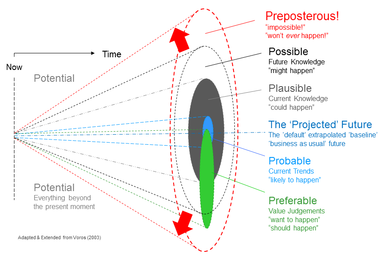
The first steps are usually driven by trends, technological or societal change, environmental, legal or political uncertainty, own observations, and sometimes simply expectations or anxiety of what’s to come. Through scenarios, for example, we can model possible and plausible future states – scenarios give us for example the Futures Cone (see figure below and J. Voros’ explanations here). Through the long-term perspective in scenarios we can systematically identify the problem areas of the future. We can address questions like: where will future problems lie, what common denominators do fields like content and health have? What are likely future opportunities? How does that fit existing market participants?

These first steps support us in understanding the impact of change, not only in general, but also in the context of an industry or single organization.

However, truly value-creating Foresight practices do not end here. If applied the right way, foresight supports us (companies) in becoming more concrete about the future by assessing opportunities and identifying the most promising ones – based on our assets, our capabilities, our network, ambitions and strategy. It helps in understanding, exploring and managing in uncertain environments. Read more about this here.

nextMedia Hamburg’s program Content Foresight Health will dive into two fast changing industries. By combining competences from both industries in a collaborative and participatory approach, the program is a very promising attempt at unveiling so far undetected potential and opportunities at the two fields’ intersection. At first sight, the connection might not be obvious, but once you start to think about it you quickly start to think about the way content will be transferred in the future, how this might expand the possible audience to people that could not be reached in the past, how it might enhance and better people’s life, how it might improve treatments through effective, technology-supported and/or gamified transfer of personalized treatment plans…

Once you start to think about it, possibilities appear to be vast. What is missing, then, is a way to explore and assess them systematically. And this is what Content Foresight will provide.

See the full overview in PDF via this link.

Contact us to find out how you can keep up with this speed of innovation and avoid being surprised by breakthroughs, and how you can participate in successes while keeping risks at a minimum.

See the full overview in PDF via this link.

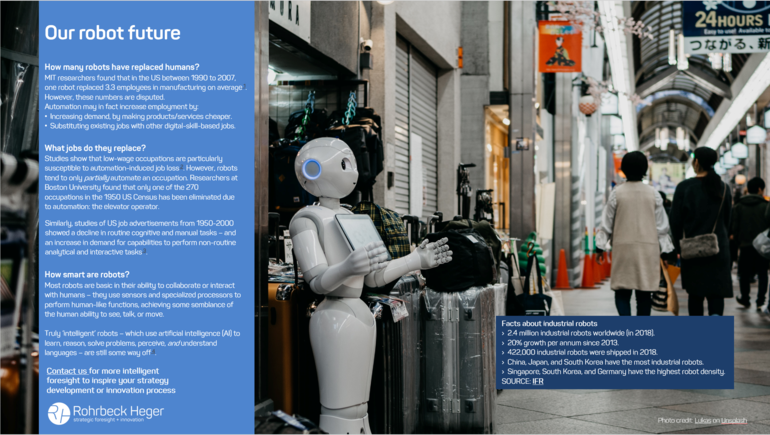
Contact us for more intelligent foresight to inspire your strategy development or innovation process.

See the full overview in PDF via this link.

Fore more information, contact our foresight-driven innovation team that provides you with adequate instruments to identify innovation fields early, to evaluate your own capabilities to address these fields and to determine the right approach and timing.

See the full overview in PDF via this link.

Fore more information, contact our foresight-driven innovation team that provides you with adequate instruments to identify innovation fields early, to evaluate your own capabilities to address these fields and to determine the right approach and timing.